A water sample
Delegations of the Confluence of European Water Bodies gather annually, bringing water samples from their respective ecosystems to commingle and unify their advocacy. A Seat for the Sea collected a water sample, from the river Thames in Woolwich, to represent the deep sea as legal and political actor at the fourth Confluence in Berlin.
Woolwich is part of the London metropolis, and it's water is a bit yellowish, as one can imagine. Not discernible though, unless you'd taste it, is that salty and freshwater mix in our water sample. The Thames through central London is brackish due to North Sea water traveling upstream.
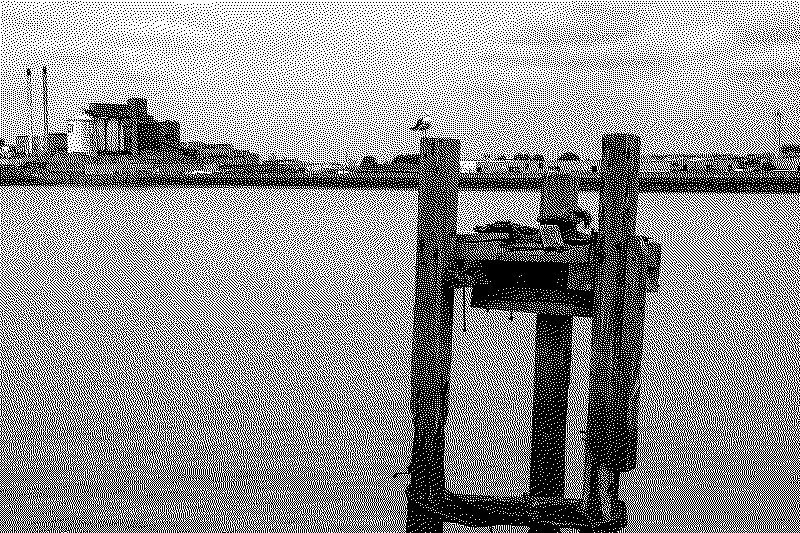
Woolwich is a reference for oceanography. Her Majesty's Ship Challenger was built here. And during the Challenger's expedition the first polymetallic nodules were hauled up from the ocean. Nodules are rock-like mineral formations lying on the seabed. They contain metals and therefore fuel the greed of mining companies.
The Challenger slid of a slipway at the Woolwich Dockyards on the river Thames in 1858. Just in front, decommissioned warships had been anchored as floating prisons, crowded with convicts. Before it was turned into a research vessel, the Challenger policed the world seas for Queen Victoria; the ship 'pacified' a dispute over land in Fiji with its guns. Then the Challenger took an international party of 250 officers and crew and 6 scientists on board and circumnavigated the globe from 1872 to Spring 1876. Two research priorities stood out: ocean's life and the ocean floor.
One of the expedition’s key findings was that the deep sea is not a desert but – despite the cold, the darkness and the enormous pressure – teems with life. The crew also recorded a historic depth sounding of 8,184 metres in the western Pacific Ocean. This accidental discovery marked the first detection of the southern end of the Mariana Trench, the deepest known point of the seabed.
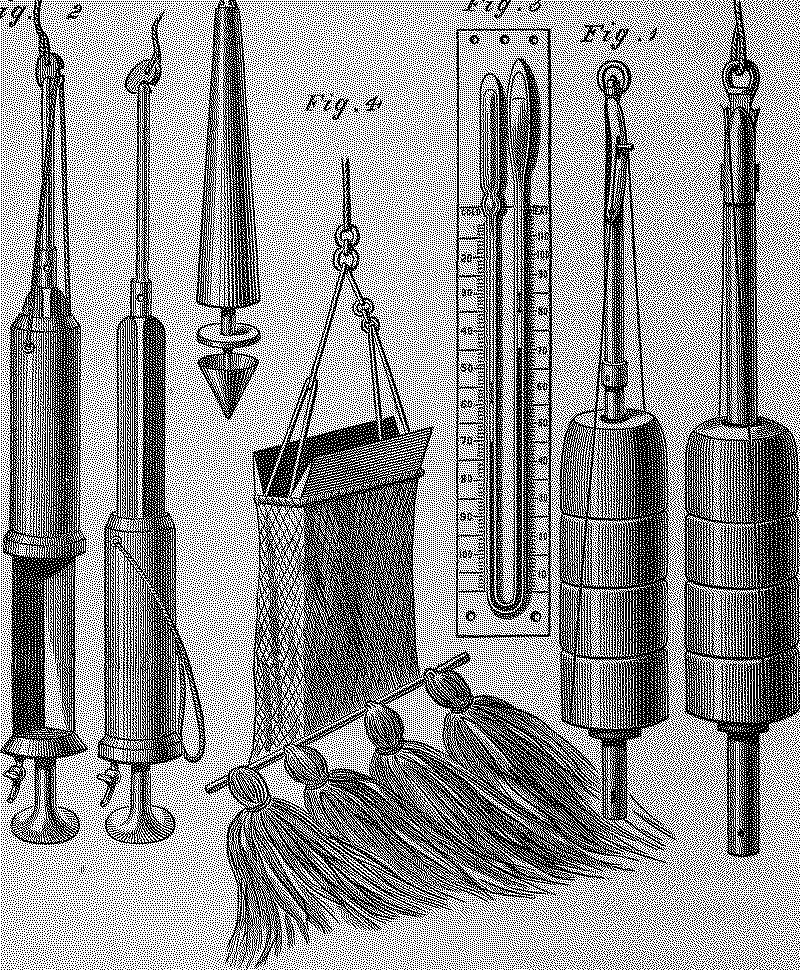
However, the British government also saw other potential benefits in this expedition, which was driven by the needs of the submarine cable industry. Telegraph cables became increasingly important to reach and control the far corners of the British Empire. Yet mapping New Zealand’s waters for this purpose proved to be one of the expedition’s greatest disappointments.
The expedition's impact remains vivid today. It marked a turning point in our understanding of the world’s oceans. Knowledge helps people to protect the ocean, care for living creatures and share wisdom without harming the environment for the sake of profit.